



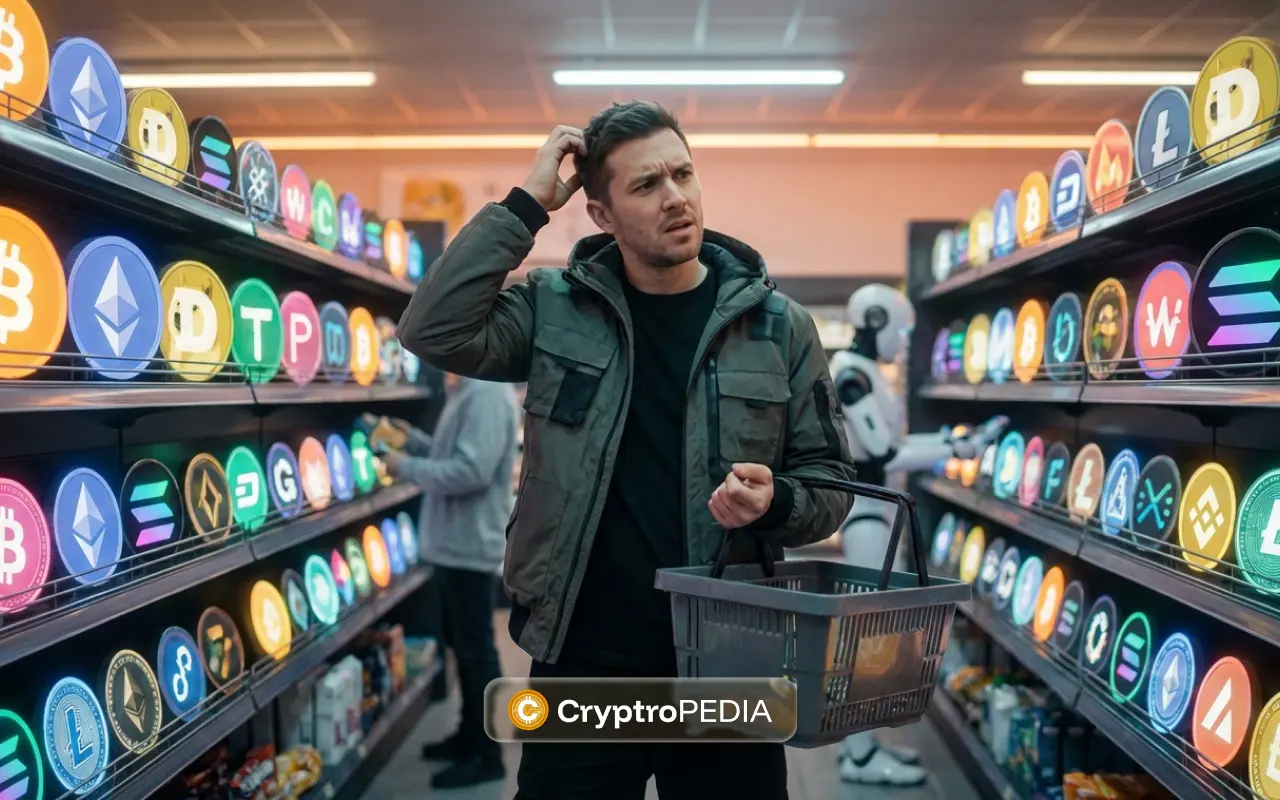
If you’re walking into the Crypto market in 2026, then you may feel like walking into a grocery store with 20,000 different brands on the shelves. They all have colorful logos, they all promise to “go to the moon” and they all cost different amounts. But a common mistake which beginners do, is looking at the price tag and thinking that “Bitcoin is too expensive at $100k+, so I’ll buy this cheap coin for $0.01 instead. If it goes to $1, I’ll be rich!” This is dangerous thinking.
- Bitcoin: The King (Digital Gold)
- Ethereum: The Builder (Digital Oil)
- Bitcoin vs Ethereum: The Cheat Sheet
- Altcoins: The “Alternative” Market
- 1. Stablecoins (The Safety Net)
- 2. Layer 1 Competitors (The Rivals)
- 3. DeFi Tokens (The Financial System)
- 4. Utility & Infrastructure (The Tools)
- 5. Meme Coins (The Casino)
- How to Research a Coin (The “DYOR” Framework)
- Building Your Portfolio: The “Core & Satellite” Strategy
- Conclusion: Start with the Standard
All cryptocurrencies are not trying to do the same thing. Some are like money asset, some are for technology platforms and some are just jokes with no value. To build a profitable portfolio, you must understand the Three Great Categories of the ecosystem.
In this guide, we will cut through the noise and explain the core battle of Bitcoin vs Ethereum and help you navigate the thousands of Altcoins waving for your attention. But you must be aware of Cryptocurrencies before going forward.
Bitcoin: The King (Digital Gold)
- Ticker: BTC
- Launch Date: 2009
- Founder: Satoshi Nakamoto (Pseudonym)
- Consensus: Proof of Work (Mining)
Bitcoin was the first and it remains the undisputed category leader. But in 2026, you shouldn’t think of Bitcoin as a “payment system” for buying coffee. You should think of it as a savings account.
The Investment Thesis: Scarcity
The entire value proposition of Bitcoin rests on one number: 21 Million. That is the maximum number of Bitcoins that will ever exist. No CEO can print more. No government can inflate the supply. Because the supply is fixed, if demand goes up over time, the price must go up. This is why it is called “Digital Gold.”
Strengths:
Weaknesses:
Note: You buy Bitcoin to protect your wealth, not necessarily to flip it for a quick 100x profit. It is the “defensive” player on your team.
Ethereum: The Builder (Digital Oil)
- Ticker: ETH
- Launch Date: 2015
- Founder: Vitalik Buterin
- Consensus: Proof of Stake (Validators)
If Bitcoin is a calculator (does one thing perfectly) then Ethereum is a smartphone. It isn’t just money, it is a platform. Ethereum introduced the revolutionary concept of Smart Contracts, programmable money that automatically moves when certain conditions are met.
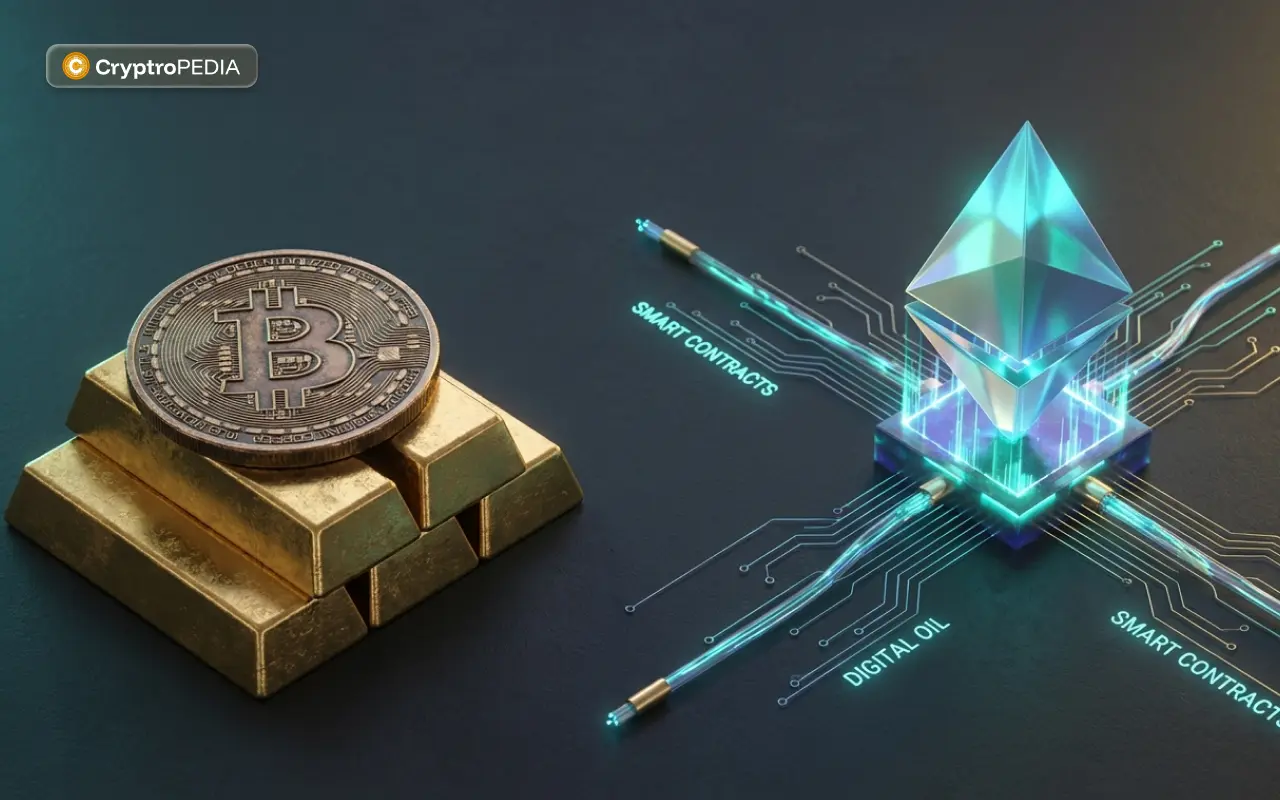
This technology powers the entire Web3 economy DeFi (Decentralized Finance), NFTs (Digital Art/Ownership) and DAOs (Decentralized Organizations) all are live on top of Ethereum.
Why “Digital Oil”?
To do anything on the Ethereum network if you are sending money, buying an NFT, playing a game, you must have to pay a transaction fee. This fee is paid in ETH (and is famously called “Gas”). Just as the real world needs oil to run trucks and factories, the crypto world needs ETH to run its applications. The more people use crypto apps, the more valuable ETH becomes.
The “Layer 2” Revolution
In 2026, you might hear about “Arbitrum,” “Optimism” or “Base.” These are Layer 2 networks.
- Ethereum Mainnet (Layer 1) is secure but can be expensive.
- Layer 2s sit on top of Ethereum, making transactions fast and cheap (under $0.01).
- Crucial Point: They all settle their data back to Ethereum, meaning ETH is still the ultimate winner.
Note: You buy Ethereum if you believe in the future of technology and applications built on it. It is the “offensive” player on your team.
Bitcoin vs Ethereum: The Cheat Sheet
When deciding between Bitcoin vs Ethereum, use this direct comparison cheat sheet:
| Feature | Bitcoin (BTC) | Ethereum (ETH) |
| Primary Analogy | Digital Gold | Digital Oil / World Computer |
| Main Purpose | Store of Value & Hard Money | Platform for Applications (dApps) |
| Max Supply | Hard Cap (21 Million) | No Hard Cap (But supply “burns”/shrinks) |
| Security Model | Proof of Work (Miners) | Proof of Stake (Validators) |
| Transaction Speed | ~10 Minutes | ~12 Seconds (Instant on L2) |
| Founder | Anonymous (Satoshi) | Known (Vitalik Buterin) |
| Risk Profile | Lower Risk | Medium Risk |
Altcoins: The “Alternative” Market
“Altcoin” is a catch-all term for any cryptocurrency that isn’t Bitcoin. In 2026, there are over 20,000 of them. To navigate this jungle without losing your money, we divide them into five distinct sectors:
1. Stablecoins (The Safety Net)
- Examples: USDC, USDT.
- What they are: Cryptos pegged 1:1 to the US Dollar.
- Use Case: Traders use these to “cash out” during market crashes without sending money back to a bank. They don’t go up in value, but they hold their value perfectly.
2. Layer 1 Competitors (The Rivals)
- Examples: Solana (SOL), Cardano (ADA), Avalanche (AVAX).
- The Pitch: “We are faster and cheaper than Ethereum.”
- Risk: High. They are betting on taking market share from the giant (Ethereum). Some will succeed, many will fail.
3. DeFi Tokens (The Financial System)
- Examples: Uniswap (UNI), Aave (AAVE).
- What they are: Governance tokens for decentralized exchanges and banks.
- Analogy: Owning UNI is like owning stock in the New York Stock Exchange, but fully digital.
4. Utility & Infrastructure (The Tools)
- Examples: Chainlink (LINK), Filecoin (FIL).
- What they are: Services that help blockchains run. Chainlink provides real-world data (like stock prices) to the blockchain, Filecoin offers decentralized cloud storage.
5. Meme Coins (The Casino)
- Examples: Dogecoin (DOGE), Shiba Inu (SHIB).
- What they are: Coins based on internet jokes or community hype.
- Warning: These are driven purely by speculation. You can make 1,000% returns in a week, or you can lose 99% of your money in an hour. Treat this as gambling, not investing.
How to Research a Coin (The “DYOR” Framework)
“DYOR” stands for Do Your Own Research. Never buy a coin just because a YouTuber or TikToker told you to. Before you put $1 into an Altcoin, check these three fundamentals:
1. Utility ( The “Why”)
Bitcoin solves inflation. Ethereum solves centralization. Does it actually solve a problem? What does this coin do? If the answer is just “to make us rich,” run away.
2. Tokenomics (The Supply)
Look at the Market Cap, not the price.
- Trap: “This coin is $0.00001, so it’s cheap!”
- Reality: If there are 500 trillion coins, it will never reach $0.01.
3. The Team
Check Who built it? Are they anonymous? Have they built successful projects before? Or is it a “ghost team” with no LinkedIn profiles?
Building Your Portfolio: The “Core & Satellite” Strategy
Now you know about the players in the Bitcoin vs Ethereum debate, how do you build a winning team? Most professional crypto investors in 2026 use the Core & Satellite approach to balance safety with growth.
The Core (70-80%)
This is your safety foundation. These are the “Blue Chips” that will survive a market crash.
- Allocation: 50% Bitcoin, 30% Ethereum.
- Goal: Long-term wealth preservation and steady growth.
The Satellites (20-30%)
These are your high risk and high reward bets.
- Allocation: 10% Layer 1s (like Solana), 5% DeFi, 5% Speculative/Gaming.
- Goal: Outsized returns to boost your total portfolio value.
Pro Tip: Never put more than 5% of your portfolio into a single speculative Altcoin. If it goes to zero, you survive. If it goes 10x, you still win big.
Conclusion: Start with the Standard
The crypto ecosystem is vast but you don’t need to own everything to be successful. If you are just starting then ignore the noise and the promises of “next 100x gem.” Start with Bitcoin and Ethereum. They are the standard for a reason. Once you understand how to buy, hold and secure those, you can begin exploring the wilder side of Altcoins.
Now you know what to buy but the next logical question is where and how to buy it safely.
Next Step: Read our step-by-step guide on How to Buy Your First Cryptocurrency.